
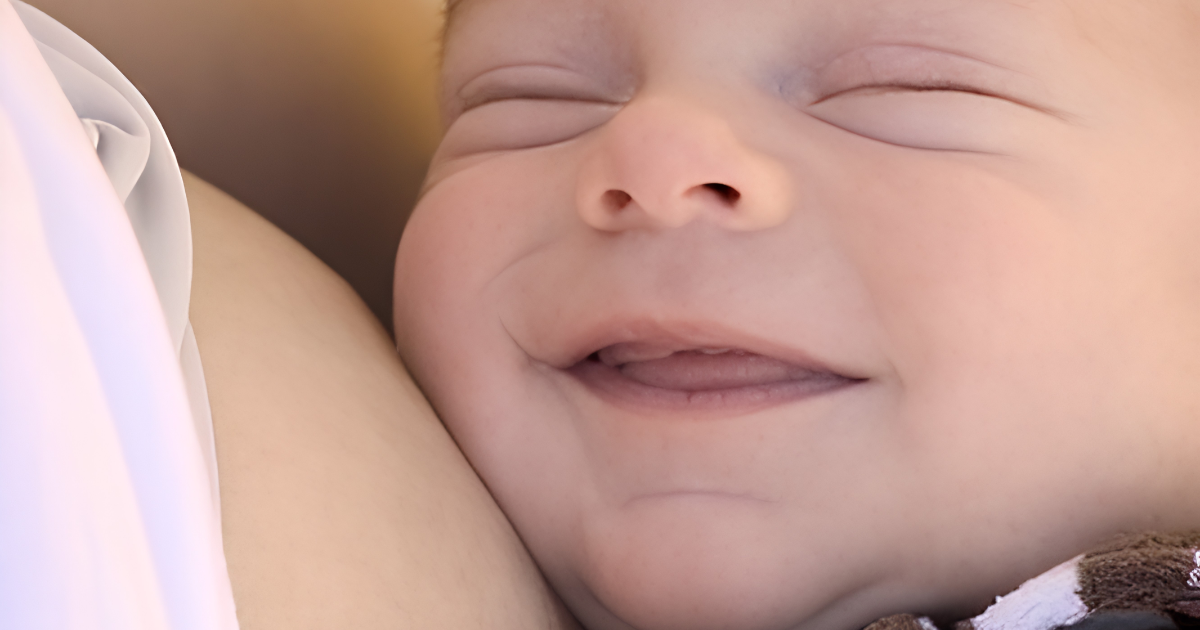
Why Breastfeeding Is About More Than Feeding a Baby
During Breastfeeding Awareness Month, we hear a great deal about breast milk—its nutrients, antibodies and health protections. These benefits matter. But when we focus almost entirely on the milk, we can overlook something equally important.
Breast milk is a substance. Breastfeeding is a relationship.
Breastfeeding is not simply the transfer of milk from one body to another. It is an experience shared between two people: two bodies, two brains and two nervous systems learning to communicate with one another.
At the breast, a baby may receive nourishment, but they also experience warmth, familiar scent, movement, skin, eye contact and the rhythm of a parent’s breathing and heartbeat.
They are held.
They are noticed.
For that moment, they are the center of someone’s universe.
Through thousands of these ordinary interactions, a baby begins to form an understanding of the world:
- I am safe here.
- My needs matter.
- When I reach for someone, someone responds.
- I am welcome.
Babies Breastfeed for More Than Hunger
Adults often divide infant needs into separate categories: hunger, fatigue, discomfort, loneliness or overstimulation.
Babies do not experience their needs so neatly. They simply know that something has become difficult to manage—and they seek the person who helps them feel safe again.
A baby may breastfeed because they are hungry. They may also nurse because they are tired, frightened, uncomfortable, overstimulated or reconnecting after a separation.
Sometimes they drink actively. Sometimes they suck lightly with few swallows. Sometimes they remain at the breast because sucking, warmth and closeness help their body settle.
This is sometimes dismissed as a baby “using the mother as a pacifier.” But the breast existed first. A pacifier substitutes for one part of the breastfeeding experience—not the other way around.
Comfort nursing is not meaningless. It may be one of the most effective regulation tools available to an immature nervous system.

The Biology of Calm and Connection
When breastfeeding is comfortable and feeding is going well, it can support a calmer state in both mother and baby.
Suckling stimulates the release of oxytocin and prolactin in the mother. Oxytocin supports milk release, but it is also associated with relaxation, social connection and activation of the parasympathetic nervous system—the part of the nervous system involved in rest, digestion and recovery.
Prolactin supports milk production and may contribute to feelings of calm and sleepiness.
For the baby, sucking and feeding are associated with the release of cholecystokinin, or CCK, a hormone connected with fullness, relaxation and drowsiness. This helps explain why babies so often soften and fall asleep at the breast.
Feeding to sleep is not necessarily a bad habit. It is one of the regulatory tools biology gives babies and parents.
Of course, breastfeeding is not calming when it is painful, distressing or accompanied by feeding difficulties. Pain, aversion, dysphoric milk ejection reflex and anxiety deserve skilled support and compassion.
The wellbeing of both people in the breastfeeding relationship matters.
Feeding and Sleeping Are Closely Connected
Anthropologist James McKenna and researcher Lee Gettler introduced the term “breastsleeping” to describe the close biological relationship between breastfeeding and infant sleep.
For young babies, feeding, sleeping, contact and regulation are not separate activities. A baby may nurse, drift into sleep, wake briefly and nurse again without becoming fully alert.
Yet many families are taught to expect something very different: a baby who feeds efficiently for a predictable period, is placed down awake and sleeps independently until the next scheduled feeding.
Some babies do this. Many do not.
Newborns frequently cluster feed. They fall asleep while nursing. They wake when placed down. They settle in someone’s arms and protest when separated from the warmth, motion and scent of a caregiver.
This does not automatically mean the baby has poor sleep habits, a feeding problem or a difficult temperament.
Sometimes the problem is not the baby.
Sometimes it is the expectation surrounding the baby.
A young baby’s nervous system expects proximity. For most of human history, the newborn’s environment was the body of a responsive caregiver—a body that moved, breathed, smelled familiar and responded.
Understanding this can replace frustration with curiosity. What if the baby is not resisting independence? What if they are seeking the closeness their developing brain expects?
Breastfeeding Helps Grow Two Brains
Pregnancy, birth and the postpartum period are times of extraordinary change in the maternal brain.
Hormones and repeated caregiving experiences strengthen brain networks involved in attention, motivation, protection and responsiveness to infant cues. The parental brain continues to develop through the everyday acts of holding, feeding, smelling, watching and responding to the baby.
Breastfeeding offers frequent opportunities for this learning.
A baby pauses.
The mother waits.
The baby looks up.
The mother speaks or smiles.
The baby shifts.
The mother adjusts her hold.
This back-and-forth interaction is not empty time between swallows. It is communication. It is relationship being built.
The baby’s brain is also developing through these repeated exchanges. When a parent responds to a sound, follows a baby’s gaze, touches their skin, sings, rocks or adjusts in response to a cue, neural connections are being strengthened.
These experiences help shape the systems that will eventually support stress regulation, emotional security, communication and relationships.
Breastfeeding does not single-handedly create attachment, and it is not the only way to nurture healthy brain development. But it naturally brings together many of the experiences a developing baby needs: touch, responsiveness, eye contact, warmth, rhythm and co-regulation.

Relationship Is Not Measured in Ounces
Recognizing the relational value of breastfeeding does not create a hierarchy of love.
Babies can be deeply nurtured through bottle-feeding, pumping, combination feeding, donor milk or formula. Attachment is built through repeated experiences of safety, responsiveness and repair—not through one feeding method alone.
Parents who bottle-feed can bring the same relational ingredients into feeding by holding the baby close, following cues, making eye contact, pausing when the baby needs a break and allowing feeding to remain an interaction rather than simply a task.
For some families who pump or supplement, time at the breast may still offer comfort and connection even when milk transfer is not the primary goal, as long as the experience is comfortable and supports the baby’s feeding needs.
During Breastfeeding Awareness Month, perhaps we can expand the conversation.
Not only: How much milk did the baby receive?
But also:
- What did the baby experience while being fed?
- Did they feel held, seen and responded to?
- Did the parent feel supported rather than judged?
Breastfeeding can be nourishment.
It can also be shelter, reunion, regulation and rest.
It can be a place where a mother learns her baby’s language—and where a baby learns that their communication has meaning.
Breastfeeding is not only about what passes from one body into another.
It is also about what grows between them.
And perhaps that relationship—being held, being seen and knowing you have a safe place to land—is one of the most meaningful parts of breastfeeding that no measurement of milk can ever fully capture.
Need lactation support, let’s connect.
Leave a Reply